The Pentagon used an emergency process to remove a checkbox for Americans abroad who've never lived in the U.S. Democrats have sued. Wisconsin told its clerks the change doesn't affect who can vote here.
First-term Democrat Ryan Spaude wants to phase out Wisconsin's voucher program. Republican challenger Bobby Lindsey wants to keep it. Here's where the 89th Assembly District candidates stand.
Incumbent Tammy Weckler-Sternard, Republican Curt Vandertie and independent Randy Wagner agree Door County shouldn't sign a 287(g) agreement. The campaign has turned on a union no-confidence vote and released personnel files.
Trump Says His Super PAC Will Pay for the Ads Taxpayers Have Been Funding
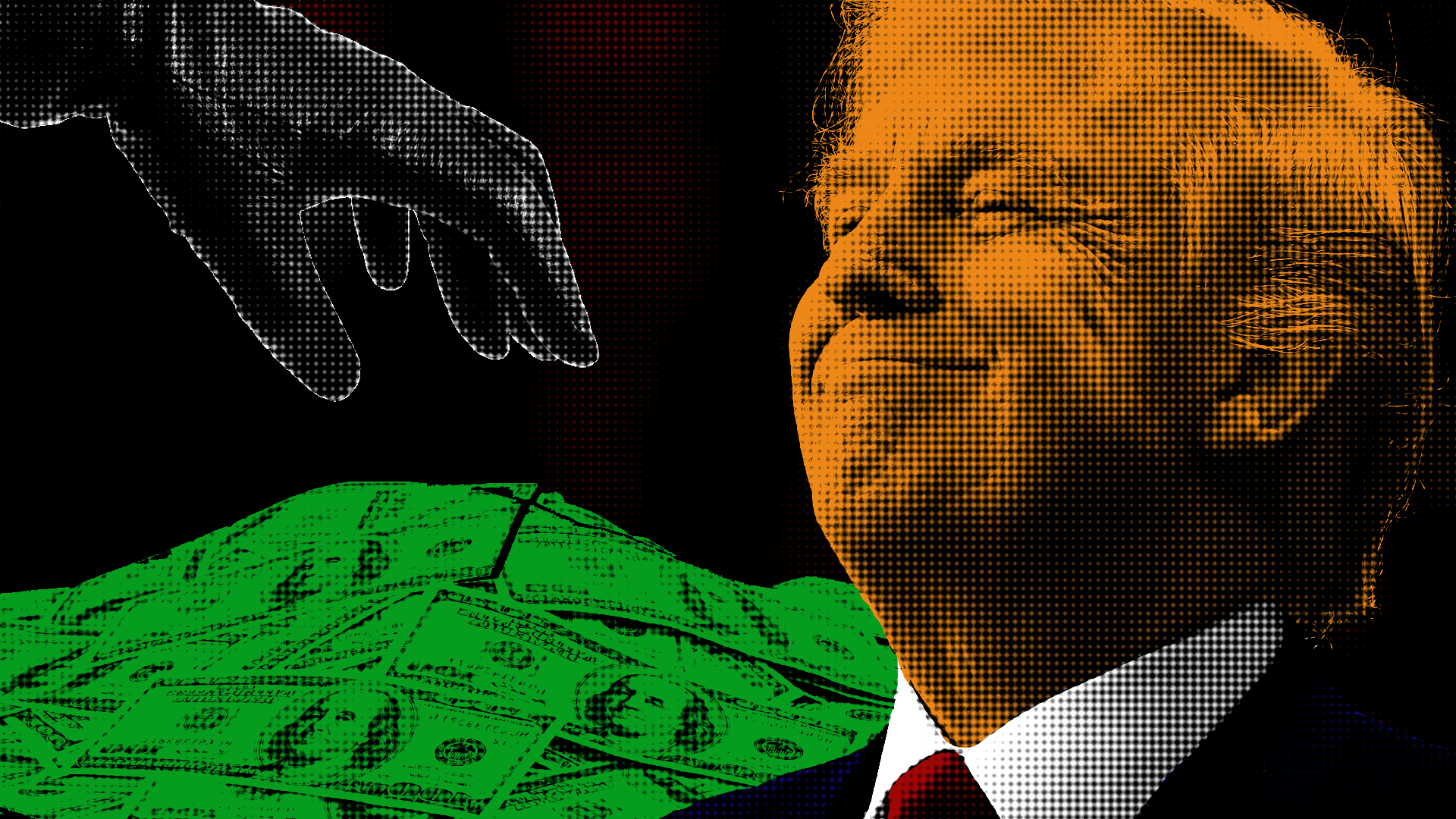
After bipartisan criticism, Trump says MAGA Inc. will cover his campaign-style TV ads going forward. Nobody has said whether taxpayers get back the millions already spent, including on spots that aired across Wisconsin.
resident Donald Trump said Monday that his super PAC, MAGA Inc., will pay for the campaign-style TV ads his administration had been running on the public's dime, after more than a week of criticism from Democrats and Republicans alike.1 Nobody has said whether taxpayers will get back what's already been spent. MAGA Inc. didn't answer when NBC News asked whether it would reimburse the government for ads that already aired, and the White House didn't answer that question either.1
How much money that is depends on who's counting. AdImpact, the political ad-tracking firm, put government spending on the spots at about $10.1 million as of Monday, CNN reported,2 and NBC News cited the firm's estimate of at least $10 million.1 The Associated Press reported the ads cost at least $1.5 million in federal money.3 When Fox Watershed first wrote about the campaign on Sept. 30, AdImpact's running total stood at $1.7 million.
Trump announced the change on Truth Social. He wrote that the "Radical Left" was upset he was paying for what he called "a positive promotion for our Great U.S.A." with public money, and he called that "a rather standard thing to do."1 He said he'd now pay for the "Patriotic Ads" himself and with money he raised for MAGA Inc.1 The super PAC had more than $400 million on hand by late July, according to the AP.3
A White House official told NBC News that MAGA Inc. "will pay for the PSA ads moving forward" and argued that administrations of both parties have used public service announcements to explain policy.1 The White House had earlier described the spots as "clearly not political."1 It hasn't said how anyone will verify that political money, and not public money, pays for future spots.3
Login for a clean experience
Sponsorships, email signups, and most ads are disabled once signed in with a free account.
No Spam. Unsubscribe anytime.
Where the Money Came From
The ads weren't paid for out of the White House's own budget. An administration official and Sen. Susan Collins, R-Maine, confirmed to NBC News that the money came from funds meant for U.S. Customs and Border Protection in the 2025 reconciliation law Republicans passed along party lines, the bill Trump calls his "big, beautiful bill."4 Collins, who chairs the Senate Appropriations Committee, said her committee had no role in that spending. She said regular appropriations bills typically bar agencies from shifting money between accounts, which is why the administration went around that process and used a reconciliation account.4
A Maryland firm, LMD Agency, holds a $20 million federal contract for what public contracting records list as a "national media campaign."1 CNN has counted at least 13 of these ads so far, some not yet aired, including spots titled "God Made Trump" and "Final Battle" and three on U.S. military operations in Iran and Venezuela.5 The White House video team made them in-house, and Trump personally helped choose the imagery and footage, CNN reported.5 The "Final Battle" spot, in which Trump asks viewers to help him "demolish the deep state," closely tracks a 2024 campaign ad.4 Every one carried a disclaimer saying it was paid for by the U.S. government.1
Wisconsin Saw Them Too
The spots aired across Wisconsin, according to the Milwaukee Journal Sentinel, which reported that the Department of Homeland Security was paying for them out of the $20 million set aside through the reconciliation law.6 Sen. Tammy Baldwin, D-Wis., told the paper the spending was "flat-out illegal." Sen. Ron Johnson, R-Wis., didn't respond to the paper's request for comment.6 Wisconsin voters have been receiving absentee ballots since mid-September for a Nov. 3 election that includes the governor's race and all eight of the state's congressional seats.7
Republicans elsewhere were blunt. Senate Majority Leader John Thune, R-S.D., said he liked the message of one ad but that it "shouldn't be paid for with taxpayer dollars."4 Sen. Thom Tillis, R-N.C., who is retiring, said the ads felt like Viktor Orbán addressing the Hungarian people and that Trump could have used political money for a political ad.4 Sen. Jim Justice, R-W.Va., said that if the money really came out of the border account, it probably wasn't a good move.4 Senate Minority Leader Chuck Schumer, D-N.Y., called the campaign propaganda.1
What Happens Next
Monday's post doesn't settle the legal questions about money that's already gone out the door. On Oct. 1, Rep. Jamie Raskin of Maryland, the top Democrat on the House Judiciary Committee, and Rep. George Whitesides of California asked the Government Accountability Office and the Office of Special Counsel for a full accounting of the ads' cost and funding, a legal ruling on whether they broke federal law, and a Hatch Act investigation.8 Their letters cite the appropriations ban on spending public money for publicity or propaganda, the Hatch Act, the Antideficiency Act and federal criminal statutes on misusing public money.8
Legal experts cited by the AP say the ads may have violated both the propaganda ban and the limits on partisan activity by federal employees.3 Congress, despite the bipartisan criticism, took no action to block the ads before the midterms, CNN reported.2 Neither GAO nor OSC has announced a finding.
The Pentagon used an emergency process to remove a checkbox for Americans abroad who've never lived in the U.S. Democrats have sued. Wisconsin told its clerks the change doesn't affect who can vote here.
First-term Democrat Ryan Spaude wants to phase out Wisconsin's voucher program. Republican challenger Bobby Lindsey wants to keep it. Here's where the 89th Assembly District candidates stand.
Incumbent Tammy Weckler-Sternard, Republican Curt Vandertie and independent Randy Wagner agree Door County shouldn't sign a 287(g) agreement. The campaign has turned on a union no-confidence vote and released personnel files.
Federal refund checks are going to marketplace enrollees who paid full price this year, a small slice of the market. Wisconsin insurers want about 21% more for 2027, and open enrollment starts Nov. 1.