
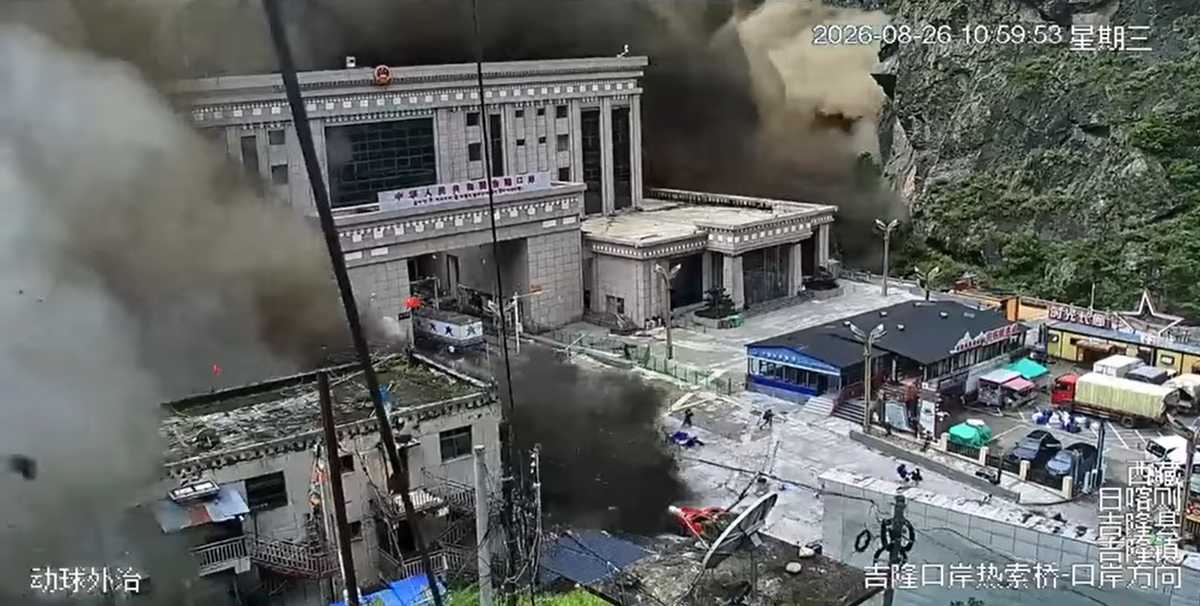
The death toll from Nepal's catastrophic flash floods passed 750 people by Sunday, with more than 3,000 still missing, as rescue crews raced against fresh flood warnings on the same rivers they've been searching for four straight days.
The disaster started Wednesday, Aug. 26, when a chunk of glacier near Langtang Lirung peak sheared off the mountainside along the Nepal-China border.¹ The collapse hit hard enough to register as a magnitude 5.2 seismic event, and the resulting mix of rock, ice, and meltwater tore down river valleys at roughly 120 miles per hour, wiping out bridges and entire settlements.¹ ²
Rescue work remains a slog four days later. Helicopter flights are grounded until the weather clears, and ground crews are still digging through feet of mud at a hydropower site in Rasuwa district, where officials believe more than 100 workers remain trapped in a flooded tunnel.¹ More than 3,700 people have been pulled out alive in Nepal so far.¹
Video of the flash flood occurring. Taken from Nepalese CCTV
The rivers aren't finished causing trouble. A new lake formed upstream from debris left by the initial collapse and started overflowing Friday, forcing search teams to pull back.¹ ³ On Sunday, Nepali officials issued fresh warnings after water levels rose again on the Bhotekoshi River, sending alerts to residents' phones after Chinese authorities reported increased flow upstream, on their side of the border.⁴ In the town of Galchhi, residents climbed onto a bridge to watch the swollen Trishuli River roll past, pointing out boulders the first flood had carried downstream.⁴
Scientists are still working out exactly what triggered the collapse, but they point to a warming Hindu Kush Himalayan region, where roughly 78% of glacier area sits in an elevation band highly exposed to rising temperatures, worsened by a monsoon season that's already left the ground saturated.¹ ⁵ For now, the death toll keeps climbing and the missing count keeps shifting. Whether that barrier lake breaks again will decide how much worse this gets.
Sources & Credits
Photo: Public domain, via Wikimedia Commons
- https://www.cbsnews.com/news/nepal-flash-flood-death-missing-americans-rescue/
- https://www.cnn.com/2026/08/26/world/live-news/nepal-flash-flooding-floods-intl
- https://www.aljazeera.com/news/2026/8/28/is-nepal-facing-another-devastating-flood-from-a-new-lake
- https://apnews.com/article/nepal-china-flood-galchhi-warning-afec20e612514ca3598c65b29f485303
- https://www.npr.org/2026/08/28/nx-s1-5945799/nepal-floods-climate-change-himalayas

Comments ()