The Pentagon used an emergency process to remove a checkbox for Americans abroad who've never lived in the U.S. Democrats have sued. Wisconsin told its clerks the change doesn't affect who can vote here.
First-term Democrat Ryan Spaude wants to phase out Wisconsin's voucher program. Republican challenger Bobby Lindsey wants to keep it. Here's where the 89th Assembly District candidates stand.
Incumbent Tammy Weckler-Sternard, Republican Curt Vandertie and independent Randy Wagner agree Door County shouldn't sign a 287(g) agreement. The campaign has turned on a union no-confidence vote and released personnel files.
Manitowoc County Drafts Data Center Rules as Northeast Wisconsin Keeps Saying No
A 24-page draft would cap data centers at 500 acres and limit farmland loss to 100. It lands as Brown County towns, Wrightstown voters and both candidates for governor push back on the industry.
Manitowoc County has put a 24-page draft ordinance on the table that would cap any future data center at 500 acres and let no more than 100 of those acres come out of farmland.1 The draft also requires closed-loop cooling systems to limit water use and protect groundwater, along with noise monitoring and air quality plans.2 County Executive Tyler Martell said the rules followed extensive research and public feedback, and the county's Planning and Park Commission received the draft Monday, Sept. 28.3 Nothing has been adopted yet. The draft is posted on the county website for public review, and the County Board is expected to hold a public hearing before it votes.1
The ordinance is the second half of a plan the county set in motion in April, when the County Board unanimously approved an 18-month moratorium on data center permits.4 That pause runs into fall 2027, and county leaders want permanent rules in place before it ends.3 The draft defines a data center as a facility of at least 50,000 square feet, on 10 or more contiguous acres, built to house at least 1,000 servers.1
What the Draft Would Require
Applicants would have to submit plans covering site development, buildings and equipment, power infrastructure, backup and emergency generation, water supply and use, wastewater and air quality controls.1 Martell tied the farmland cap to the county's rural economy, saying agriculture matters there and the county wants to preserve its farmland.2 Manitowoc County Farm Bureau President Brent Sinkula said the cooling loop was his biggest concern, because any leak would reach groundwater that farmers rely on for livestock and their own families.2 He also pointed to air pollution and to noise above certain decibel levels as threats to animals.2
The 500-acre ceiling would rule out projects on the scale now going up along Lake Michigan to the south. The Port Washington data center under construction covers 672 acres and 2.5 million square feet of buildings, built to hold hundreds of thousands of servers.1
Martell has said he wants residents to have time with the draft before anyone acts on it. Speaking on WOMT before its release, he said the public would get time to "marinate on it," followed by a series of discussion sessions where people could raise concerns or say what they like.5
How Manitowoc Got Here
The moratorium started with farmers. In February, the towns of Two Creeks, Two Rivers and Mishicot asked the county for a pause after learning a developer had approached property owners about buying their land.4 That developer, Cloverleaf Infrastructure, was working with NSI Land Services and looking for up to 6,000 acres in the Mishicot area, FOX 11 reported, and one farmer was reportedly offered $70 million to $80 million.6 Two Creeks farmer Anthony Barta told FOX 11 his family runs close to 1,000 animals and worried what a data center next door would do to them.6
At the April 28 meeting, supervisors stretched the proposed pause from 12 months to 18 on a 22-1 vote, then passed the amended moratorium unanimously.7 Board Chair Matthew Phipps said the county needed "more information and correct information."4 Cloverleaf's chief development officer, Aaron Bilyeu, told the board these projects bring "a different scale of building."4 Resident Susan Dirkman said the towns are not industrial wastelands for companies to come in and destroy.4
Login for a clean experience
Sponsorships, email signups, and most ads are disabled once signed in with a free account.
No Spam. Unsubscribe anytime.
Brown County's Patchwork
Cloverleaf's search didn't start in Manitowoc County. In January, the Houston-based company dropped plans in the Village of Greenleaf and the Town of Wrightstown in southern Brown County after opposition from residents and local leaders. It had been operating there through a Delaware company called Bear Creek DevCo LLC.8 A Cloverleaf spokesperson said that after talking with leadership in both communities, the company would not pursue data centers there.8 The same month, Cloverleaf walked away from the Town of Carlton in Kewaunee County, where Town Chairman David Hardtke said residents did not want the project.9 Carlton is home to the shuttered Kewaunee Power Station, whose owner is seeking approval for a new nuclear facility at the site and expects AI and data centers to drive up power demand.9
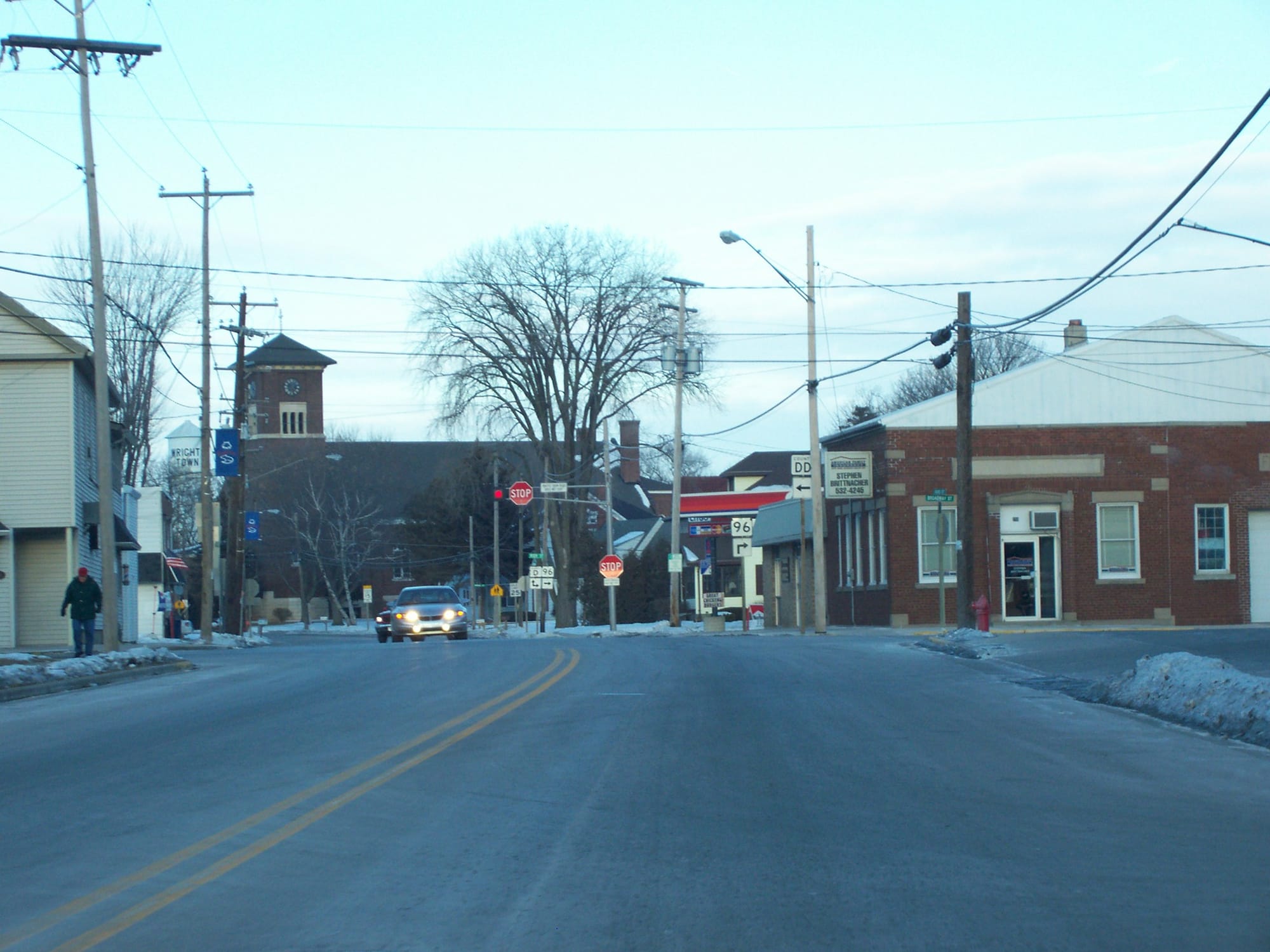
Next door, the Village of Wrightstown's leaders were more open to the idea. Emails obtained by the Green Bay Press Gazette showed village officials had been in contact with Cloverleaf since at least January, including a closed-session meeting with company representatives on Jan. 20, and that the company later shared documents from the Port Washington project.10 Village Administrator Travis Coenen described the company's contact with the village as minimal, and he and two board members rejected residents' request for a moratorium on data center discussions.10 Residents pushed for a direct vote and got one in August. A total of 1,033 voters, or 87.2%, said the village should not support or facilitate infrastructure for large data centers, against 151 who said it should.11 The advisory result now goes back to village officials, who have to draft a resolution putting it into effect.11 Fox Watershed covered the vote in August.
Brown County government itself has stayed on the sidelines, largely because it can't do what Manitowoc did. Brown County doesn't have countywide zoning, so land use decisions belong to individual cities, villages and towns.12 When Supervisor Christopher Welch brought a countywide moratorium to the Planning, Development and Transportation Committee in June, the committee tabled it.13 Committee Chair Norbert Dantinne Jr. told residents to take the request to their town or village, saying "we have no power here as a county."13 Welch and Supervisor Dan Theno said they would reach out to municipalities about a framework for local protections, and Theno said a statewide standard is the real fix.12 Tricia Braun, executive director of the Wisconsin Data Center Coalition, said moratoriums should be used to write ordinances rather than simply block growth.12
Some Fox Valley communities have written their own rules. Kaukauna amended its zoning in January to add an extra layer of review for data centers in its industrial district and to limit how much water and electricity an approved project can use.14
A Vacuum in Madison
Counties and towns are filling a space the Legislature left empty. Four sets of data center bills moved during the 2025-26 session, and none became law.15 A Republican bill from Rep. Shannon Zimmerman and Sen. Romaine Quinn, meant to make data centers pay for their own energy and water infrastructure, passed the Assembly 53-44 and cleared a Senate committee but never got a Senate floor vote.15 Bills to ban nondisclosure agreements between data centers and local governments, to create a separate utility rate class tied to renewable energy and labor standards, and to impose a statewide moratorium all died too.15 Lawmakers return to session in January 2027.13
Public opinion has moved faster than the Capitol. In the Marquette Law School Poll released Sept. 30, 74% of Wisconsin voters said the costs of data centers outweigh the benefits, and 68% supported a one-year moratorium on construction.16
Both candidates for governor are running against the deal the industry has gotten so far. Democrat David Crowley told FOX 11 that the "free ride" big tech data centers have had in Wisconsin will end if he wins, and that a community that doesn't want a data center shouldn't be forced to take one.17 Republican Tom Tiffany said there should be "no data centers unless we get rid of the subsidies," and called for no electric rate increases for current customers, no nondisclosure agreements, local input and no more conversion of productive farmland.17 Data centers are one of the listed topics for their Oct. 21 debate, which WBAY will carry in Green Bay.18
What Comes Next
Manitowoc County's draft is open for public review now. Martell has said the commission will leave time for input before the ordinance moves to committee discussion and then the County Board, which is likely to hold a public hearing before a final vote.3,1 The moratorium gives the county until fall 2027 to finish.
The developer interest hasn't gone away. Cloverleaf's Bilyeu told FOX 11 in January that the company was still interested in Northeast Wisconsin as a potential site, and Martell said in September that interested parties are still pursuing the opportunity despite the pause.6,5 In Brown County, the next decisions belong to town and village boards, starting with the resolution Wrightstown officials owe voters, and to whichever governor and Legislature take office in January.
The Pentagon used an emergency process to remove a checkbox for Americans abroad who've never lived in the U.S. Democrats have sued. Wisconsin told its clerks the change doesn't affect who can vote here.
First-term Democrat Ryan Spaude wants to phase out Wisconsin's voucher program. Republican challenger Bobby Lindsey wants to keep it. Here's where the 89th Assembly District candidates stand.
Incumbent Tammy Weckler-Sternard, Republican Curt Vandertie and independent Randy Wagner agree Door County shouldn't sign a 287(g) agreement. The campaign has turned on a union no-confidence vote and released personnel files.
Federal refund checks are going to marketplace enrollees who paid full price this year, a small slice of the market. Wisconsin insurers want about 21% more for 2027, and open enrollment starts Nov. 1.





.jpg)