5 min read

Green Bay's Revival of the Economic Bill of Rights

FDR proposed that the original Bill of Rights was inadequate to the pursuit of happiness. Alder Shelton submitted a document committing, as a city, to what we stand for and to be a guiding light.

Green Bay's Revival of the Economic Bill of Rights

Roosevelt's Vision for the Economic Bill of Rights

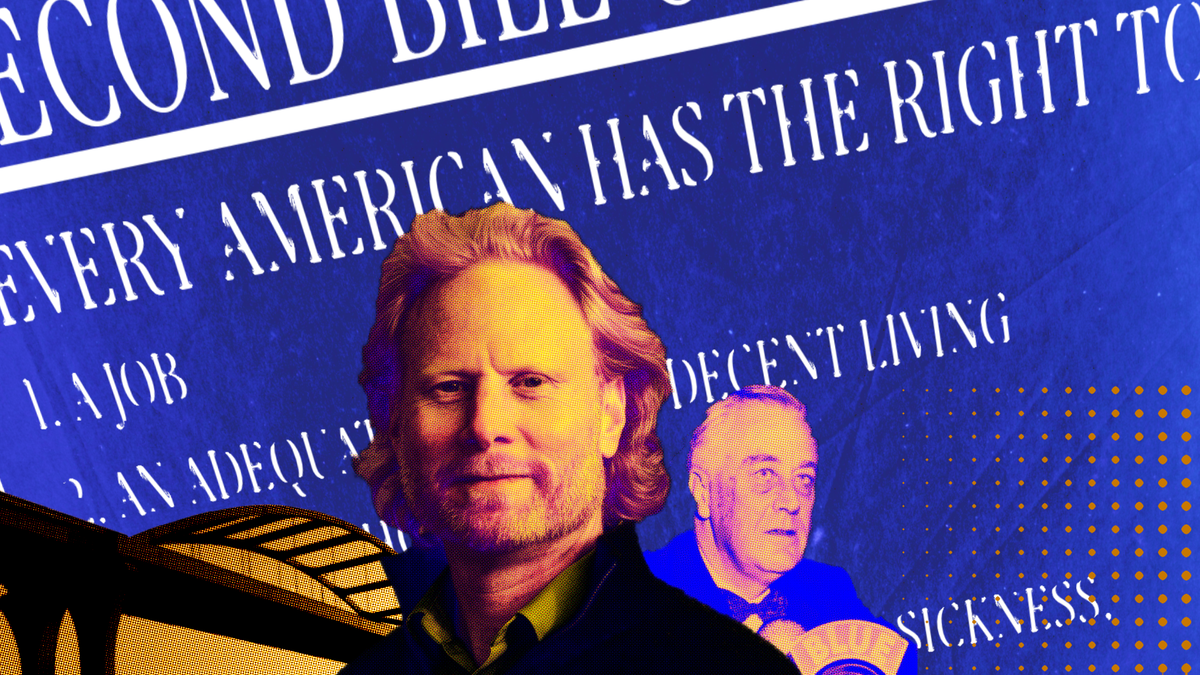
Approximately 82 years ago, in January of 1944, Franklin D. Roosevelt proposed in the State of the Union address, delivered via his now-famous fireside chats, that the original Bill of Rights was inadequate to assure us equality in the pursuit of happiness in an industrial economy. Roosevelt's solution was that of a Second Bill of Rights, the Economic Bill of Rights.

"Necessitous men are not free men"
Franklin D. Roosevelt

FDR warns that a hungry and unemployed population is fertile ground for authoritarianism, not democracy. Roosevelt asked Congress to explore the means for implementing such a policy package, but he stopped short of drafting legislation due to his passing shortly over a year later. It exists today as an aspiration for America. Despite Roosevelt failing to materialize the ambitions of the Second Bill of Rights, aspects of his vision found themselves becoming law in the decades after.

Medicare and Medicaid, signed into law about two decades later under Lyndon B Johnson, cover the medical care needed for seniors and low-income households. The GI Bill, expansions into Social Security, and federal housing programs slowly made their way into everyday American life. What never happened, though, is the full realization of FDR's perspective: a nation where a legitimate floor is made in which no American is to fall through, treated with the same gravity as free speech or the right to a jury trial.

Exactly what President Roosevelt was working towards

In FDR's address, he laid out the exact rights that should be enshrined into law for America as part of his Second Bill of Rights.

  • The right to a useful and remunerative job in the industries or shops or farms or mines of the nation;
  • The right to earn enough to provide adequate food and clothing and recreation;
  • The right of every farmer to raise and sell his products at a return which will give him and his family a decent living;
  • The right of every businessman, large and small, to trade in an atmosphere of freedom from unfair competition and domination by monopolies at home or abroad;
  • The right of every family to a decent home;
  • The right to adequate medical care and the opportunity to achieve and enjoy good health;
  • The right to adequate protection from the economic fears of old age, sickness, accident, and unemployment;
  • The right to a good education.

Green Bay's Economic and Social Bill of Rights

Alder Jon Shelton submitted a document to celebrate the 250th anniversary of America by committing as a city to what we stand for and to be a guiding light for the next two years of this council session. Shelton calls this "A Resolution Proclaiming the City of Green Bay's Commitment to an Economic and Social Bill of Rights".

Alder Grant opened the discussion by asking why the council needed to do this rather than what it is already doing. Alder Shelton stated that he sees this like the Declaration of Independence, like a vision for the future. Grant continued, stating that some parks are inaccessible due to the homeless population, and asked for actionable items for the whole document. She continued to question the document's premise.

"I'm very confused because there is a lack of numbers..."
Alder Grant

Alder Jon Shelton continues to clarify that this document is a vision statement for the city, and that the points laid out are for deliberation when they come before the Common Council. Alder Jim Hutchison notes that when he received the document, it didn't include clean drinking water. He continues, stating that people take clean drinking water for granted, even as many threats to it persist. Hunchison pushes back on Alder Grant's point about no metrics, stating that life, liberty, and the pursuit of happiness are open to interpretation as well. Alder Bill Morgan chimes in and states, in summary, that the state does not allow for many of the policy outcomes laid out and that adding additional laws is unnecessary. After a few testimonies, the common council voted in favor of the resolution 9-3. Alders Bill Morgan, Jennifer Grant, and Melinda Eck voted against the resolution.

Notable Testimonies

Steve Campbell

Former Green Bay-6 Alder, Election Denier

Steve starts out his statement on the topic by comparing Alder Shelton's non-binding Economic Bill of Rights to Governor Evers not handing over the election data to the federal government, which would violate the principles of Article 1, Section 4, Clause 1 of the Constitution. He goes on to state that there was nothing in the document about equal and fair elections, incorrectly, as it was the last right listed in the document. Campbell continues by stating these should be done by the way of other aldermen, the correct process to vote on it. He incorrectly states he is a victim of voter fraud, which was contested when he lost to Joey Prestley and he refused to concede the race. Alder Joey Prestley steps in after Steve's statement and reads out number 10 on the document, which, again, was the right and ability to participate in free and fair elections. Joey asks Steve if that's what he hoped would be in the document. After Steve stated he needed to look at it again, Alder Prestley quickly questioned whether Steve had read the document. Joey continued to question Steve about what he disagreed with in the document and what people didn't care about. Steve continued to talk about Governor Evers and ignoring the federal government, along with forming a committee, which was not in the conversation regarding this document.

Green Bay city council candidate refuses to concede after recount
Steve Campbell paid thousands of dollars out of pocket for a recount last week, where officials confirmed he lost the election to challenger Joey Prestley.

For more information on Campbell's election denial

Amaad Rivera-Wagner

Wisconsin Assemblyman District 90– Green Bay, Former Green Bay Chief of Staff

Rep. Amaad Rivera-Wagner starts off referring to Vince Lombardi and Norman Miller as the first people to help integrate the Green Bay Packers, only the second team to do so in the country. Players could not live in the city where they played. The two got together to lobby their state legislator to create the first anti-discrimination laws around housing. Rep. Rivera-Wagner boasts about Green Bay being the number 1 place to live, pointing to the fact that we take care of one another. He expands on this, paraphrasing that the Economic and Social Bill of Rights for Green Bay expands on those ideas and puts them on paper.

Tarl Knight

Owner of The Tarlton Theater/On The Tracks, Director of the Shipyard District, Former Candidate for Green Bay Alder 9

Tarl started the speech reiterating the spirit of America, mentioning the Declaration of Independence and life, liberty, and the pursuit of happiness. He states that if we have these services, we should continue to provide them. Similar to the organizations that he is involved with, Knight points out that this document is just like a mission statement for the city.

Subscribe to the Fox Watershed

Free, full access to long form articles.

Member discussion