
Gerrymandering
For those who don’t know, gerrymandering is the practice of creating electoral districts that are inherently unfair. A relatively recent piece of breaking news has been the recent push to entrench gerrymandering in Texas. Under the new proposed maps, Texas Republicans could gain up to five seats in the House, and these new maps are heavily supported by the Trump administration, for obvious reasons. Texas Democrats went so far as to flee the state to prevent the legislature from meeting a quorum. The federal government even got involved, with the FBI offering to locate and return the absent representatives. Eventually, Governor Greg Abbot ended the special legislative session and the representatives returned, but I suspect the fight over gerrymandering is just beginning.
California Governor Gavin Newsom responded to the proposed Texas maps by threatening to gerrymander California to give Democrats five or six House seats and neutralize Texas's efforts. Newsom paints his proposed map changes as necessary to prevent Trump from grabbing more power, while Republican lawmakers point to Democrat gerrymanders in states like Maryland or Illinois to justify their proposals. We have officially stopped even pretending to care about the fairness of electoral maps, and that’s a problem.
Drawing fair election maps is almost impossible because of the rural-urban divide. If you tried drawing a uniform grid—imagine electoral districts arranged like a checkerboard—your election maps will vastly favor rural voters. You could have millions of urban voters in a single district that can only elect one representative. In the surrounding countryside, you could have several districts with populations in the tens of thousands. Each of them would get to elect their own representative. You wind up with a situation where a minority of people hold the majority of electoral power. Land doesn’t vote, people do.
However, if you draw maps based on population, you end up with the opposite problem. If I tried to draw election districts that each contained, say, 50,000 people, a large city could easily dominate elections, especially since the majority of Americans live in cities. On paper, drawing maps based on population is closer to fair, but it has a problem. Urban voters usually don’t understand the needs and concerns of rural voters, and vice versa. Maps tend to disenfranchise one bloc of voters at the expense of others. A fundamental rule of democracy is that your voice and vote are supposed to matter, and maps based strictly on population tend to create a system where rural voters don’t have enough political influence to make any meaningful change.
Drawing fair electoral maps is so tricky that the Founding Fathers weren’t able to solve it. It is the entire reason we have a House and Senate. House representation is based on population and tends to favor urban areas. Every state only gets two Senators, which favors rural areas. As initially conceived, I think it’s a pretty brilliant way to address the problem. It forces urban and rural areas to find common ground and compromise, because neither has the power to do everything by itself.
With politicians openly advocating for gerrymandering, our most fundamental democratic right is under attack. In a democracy, it is the right for your vote to matter. It’s even more important than voting, and the only thing that separates us from countries like Russia and North Korea.
You can tell a politician is lying when their lips are moving. In a democracy, the voting public has a responsibility to hold its elected officials accountable. It is challenging to remove a politician who lives in a safe district, and gerrymandering makes as many of those districts as safe as possible. It doesn’t even matter which party wins this gerrymandering war; the people will suffer. If you believe that the establishment Rs or Ds will go to bat for you when they know their political future is secure as long as they don’t rock the boat too much, I have a bridge to sell you.
I live in Wisconsin. We are the definition of a purple state. We voted for Trump in 2016, Biden in 2020, and Trump again in 2024. Despite this, until very recently, our state legislature was a seat or two away from a Republican supermajority. It sucks when your vote doesn’t matter, no matter what your political opinions are.
I don’t think there’s an easy way back from our current mess. As I’ve said before, what someone does is meaningless without knowing why they’re doing it. I can see two possible reasons for openly gerrymandering. The first is to blatantly grab and consolidate power for your political party, which will not solve any of America’s political problems. The second is to draw more attention to the practice, intending to force some sort of reform.
No matter what the reform is, someone will be unhappy about it. Fair maps are almost impossible. I think ensuring that every committee in charge of districting is bipartisan will go a long way towards making things better. An even better solution would be to draw maps with the specific goal of making them as democratic and representative as possible. Still, politicians aren’t exactly known for doing the right thing. We can’t force them to be moral, but the ability to hold your government officials is fundamental to democracy and much, much more important than which party happens to be in charge.
Featured image from GeoJango Maps on Unsplash.
Like what you see?
This article was originally published to the James' Substack, Sarcastrophe. Consider taking a look at other published works.
Written by
What's Next?
Brown County Library Board Grapples With Equity, Expansion, and the Future of Public Service
GREEN BAY — August 21, 2025 The Brown County Library Board met Thursday evening to hash out a full agenda that touched on everything from rural literacy deserts to Narcan availability, from multimillion-dollar capital investments to the price of photocopies. What emerged was a picture of a library system trying to balance bold expansion with fiscal caution — and a commitment to equity that sometimes runs up against political and financial roadblocks. Pulaski: Uncertainty in a Community Without
Identity Politics is Dead
For those unfamiliar, identity politics has been the default method of leftist organizing for as long as I can remember. The idea originally entered the public discourse in a 1974 manifesto by the black feminist activists of the Combahee River Collective. The idea is relatively straightforward. Every person is a collection of different identities. For example, some of my identities might be as a white, heterosexual man with ADD. Every single identity you have changes the experiences you have in
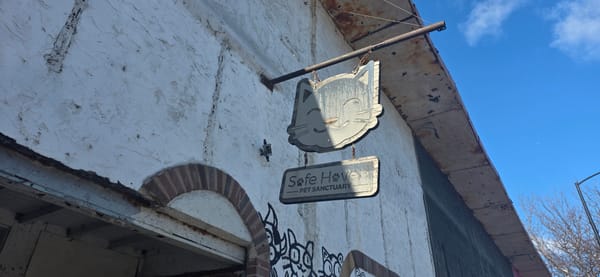
City of Green Bay Orders Removal of Unhoused
Today, Safe Haven Pet Sanctuary received an order from the City of Green Bay to stop housing unhoused people overnight. This comes after Safe Haven allowed unhoused people to stay during the snap freeze, with many people unable to access alternatives like St. John’s Homeless Shelter. The order also listed allegations of drinking and smoking occurring on the premises. These claims are currently unsubstantiated. Instead of working to house these people, the city is focusing on attacking businesses