
Brown County Library Board Takes Emergency Action on Central Library Saturdays, Signals Security Changes Ahead

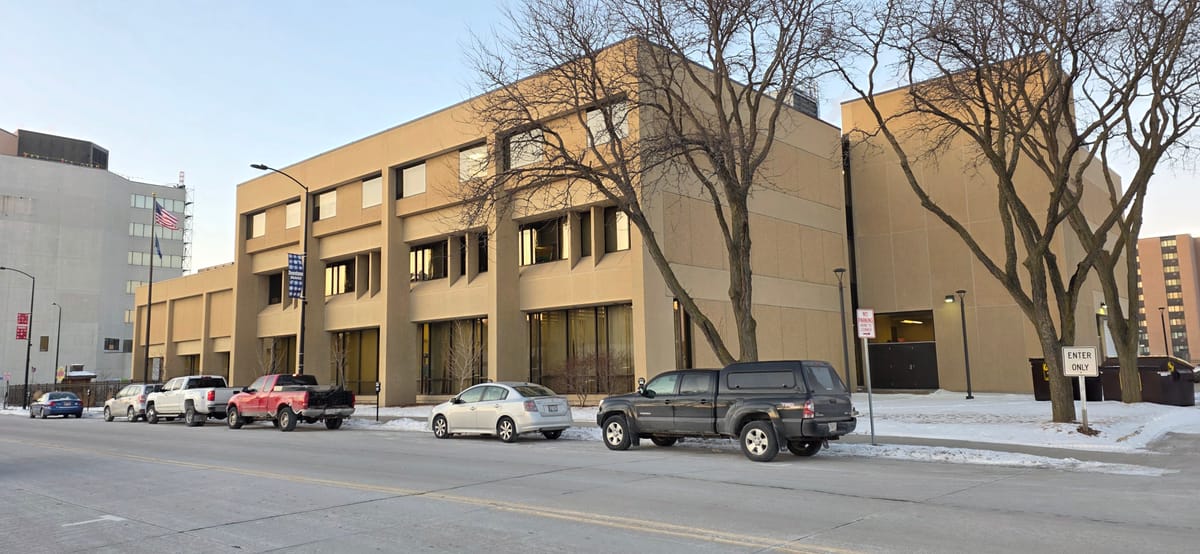
At 5:15 p.m. on Tuesday, January 20th, 2026, the Brown County Library Board convened a special emergency meeting at the Central Library to address a question that had been hanging over the building since the prior week: should Central remain open on Saturdays under current conditions, and if so, what must change to keep patrons and staff safe?
The meeting followed a tense January 15th board discussion in which multiple members expressed concern about escalating behavior and capacity challenges at Central on Saturdays, but no vote to close could occur because the item was not posted on that meeting’s agenda. By January 20, the board had created the procedural opening to act, and the sense of urgency was still very much present.
What resulted was a set of decisions that reshaped Saturday operations immediately, set a path toward restoring a formal security presence for the first time in years, and left the most immediate question, whether Central would be open the coming Saturday, in the hands of staff via a newly required risk assessment.
A systemwide hours plan collides with Central’s Saturday reality
Library Director Sarah Sugden opened the main agenda item by presenting two linked recommendations: modifying Central’s Saturday opening hour from 9:00 a.m. to 10:00 a.m., and restoring a security presence at Central, potentially through a contracted vendor, as a trial through the end of May.
Sugden framed the proposed hour change as part of broader system consistency and operational readiness, explaining that a later opening would allow staff more time to prepare the building and manage tasks that have become more challenging.
The discussion quickly shifted to the core issue. Saturday operations at Central are different. They are busier, more complex, and increasingly strained.
Board members repeatedly returned to the same theme: the library’s mission requires open access, but the board also has a responsibility to ensure the building is safe and that staff are not absorbing risk without appropriate support.
Security: not a new idea, but now treated as unavoidable
Sugden told the board the library has not had a regular contracted security presence since 2017 and described restoring it as a return to a long-standing practice that once supported staff and helped monitor public spaces. The proposal was not a full staffing expansion. It was a limited trial through the end of May focused on Saturdays, roughly seven hours per week.
The board also discussed an alternate option: off-duty law enforcement coverage. Members noted they had been told the Sheriff’s Department would not provide coverage as part of regular staffing, but that off-duty officers might be able to pick up shifts. Several members viewed this as a possible interim solution while a longer-term vendor contract is researched and implemented.
Even among members who differed on whether Saturday closure was necessary, there was little disagreement on direction. Central needs additional support on Saturdays. The unresolved questions were how soon, under what authority, with what expectations, and with what definition of “security.”
Defining what “security” actually means
Several board members emphasized that the board must understand what security staff would be authorized to do. If “security” were left undefined, members warned, the library could end up with inconsistent enforcement, escalation, or actions misaligned with library values and policy.
Sugden acknowledged the concern and described security’s historic role as monitoring spaces, supporting staff, and coordinating responses. She indicated the library could provide task lists and clearly defined expectations as part of onboarding any new security partner.
The emphasis was notable. The board was not simply asking for a guard. It was asking for a defined role with limits, accountability, and alignment with the library’s mission.
“What changes this Saturday?”
The most pointed exchange of the evening came when board member Brian Anderson, attending virtually, said he arrived prepared to vote to close Saturdays until security was in place. He asked directly what would change this coming Saturday compared to the status quo.
Sugden said it was difficult to predict patron behavior and acknowledged that beyond staffing adjustments and ongoing rule enforcement, there was no guarantee of a meaningful change by the upcoming weekend. That answer concerned several board members.
Wendy Woodward expressed discomfort with the idea of opening Saturday with no additional security in place, particularly given winter conditions and the potential for increased crowding. She emphasized the responsibility to both patrons and staff and noted that the need for additional resources has been discussed before.
John Van Dyke took a different view. He described observing improvements during a recent Saturday visit, including structured computer-use policies that reduced conflict and improved compliance. He cautioned against closing if conditions had not significantly worsened and raised concerns about families who rely on Saturday access.
The divide became clear. Some members felt the risk remained too high without security and favored closure until support was present. Others felt closure required clearer evidence of acute change and worried about the impact on community access.
Board actions and votes
The board voted to approve the Saturday opening time change from 9:00 a.m. to 10:00 a.m. at Central. One member voted no, but the motion passed.
The most consequential procedural action followed. The board directed the executive director to conduct a risk assessment, categorizing risk as low, medium, or high, before the upcoming Saturday. If the risk was deemed high, Central would close on Saturdays until proper security is implemented. If the risk was moderate or low, the library would remain open.
Board members debated whether staff could objectively assess risk without turning the process into either subjective judgment or a foregone conclusion. Supporters argued the motion was necessary to prevent inaction. Critics questioned whether it simply transferred responsibility without resolving disagreement.
The motion passed, with at least one abstention.
The board then authorized staff to engage outside security services for Central as soon as practical. The motion passed, with Brian Anderson voting no.
Larger unresolved questions
Beyond votes and motions, the meeting surfaced deeper policy questions that remain unresolved. Board members raised concerns about whether Central is functioning as a de facto warming space, how to balance welcoming access with enforcement, how overcrowding should be monitored, and who determines when conditions require restrictions.
Those questions were not settled, but they were placed clearly on the record.
What happens next
By the end of the meeting, three outcomes were clear. Central’s Saturday opening time will shift to 10:00 a.m. The board has authorized staff to pursue a restored security presence. Whether Central opens on the upcoming Saturday depends on the executive director’s risk assessment, with closure required if the risk is deemed high. The board acted, but the immediate outcome remained contingent.
For community members who care about library access, worker safety, and local governance, the January 20 meeting offered reassurance and uncertainty at the same time. The board treated safety concerns as serious and actionable, while acknowledging that the future of Saturdays at Central may change quickly depending on conditions and available support.
That uncertainty now defines the moment the library system finds itself in, and the decisions that follow will shape how Central serves the community going forward.