Brown County Library Board Grapples With Equity, Expansion, and the Future of Public Service

GREEN BAY — August 21, 2025 The Brown County Library Board met Thursday evening to hash out a full agenda that touched on everything from rural literacy deserts to Narcan availability, from multimillion-dollar capital investments to the price of photocopies.
What emerged was a picture of a library system trying to balance bold expansion with fiscal caution — and a commitment to equity that sometimes runs up against political and financial roadblocks.
Pulaski: Uncertainty in a Community Without ResourcesThe Pulaski branch drew the most pointed discussion of the evening. Board members acknowledged that the existing facility is falling into disrepair, but enthusiasm from Pulaski’s village leadership appears tepid at best. The village president has been described as “not particularly enthusiastic” about the library project, with observers pointing to an inexperienced, part-time administrative structure that struggles to manage even basic municipal priorities.
With no local funding available, Pulaski’s future as a library hub will likely depend on either a major donor or county-level capital funds not slated until 2027. In the meantime, Somerville Architects will return to the drawing board with revised designs.
Denmark: Shovel-Ready Optimism
In contrast, Denmark’s new library is pushing ahead. Groundbreaking is set for October 18, 2025, with construction documents already posted for bids. Board members struck a more celebratory tone here, even as they acknowledged the need for careful budgeting.
Bridging the Digital Divide: Wi-Fi and Literacy Deserts
The Board also leaned into the language of equity, discussing the role of the bookmobile in reaching “literacy deserts” and directing staff to finally begin collecting Wi-Fi usage data. For years, outdated infrastructure left the system unable to comply with state DPI reporting requirements, effectively masking how many low-income residents rely on the library for internet access. A motion passed to ensure Wi-Fi statistics are being collected by the end of 2025. As one board member bluntly put it: “It’s embarrassing we can’t yet prove what we all know — that people rely on us as their digital lifeline.”
Central Library/Aging & Disability Resource Center/Job Center: A $20 Million StatementThe county has allocated $20 million for sweeping renovations at the Central Library — $13 million in 2026 and $7 million in 2027. A project coordinator is being sought, and the initiative has even been given a working name: “3rd on the Square.”
The merger with the Aging & Disability Resource Center and job services is framed as a model for cross-sector collaboration. The library, officials noted, is increasingly viewed not just as a warehouse of books but as the civic commons where employment, food access, and lifelong learning converge.
Fines, Fees, and the Fight for EquityThe Board approved modest increases to printing and faxing costs (black-and-white copies rising to 20¢, faxes increasing by 25¢), but the larger discussion centered on the national movement toward fine-free libraries.
While Brown County has already eliminated fines for children’s and YA materials, Board members acknowledged that the remaining $69,000 collected annually — largely from adult patrons — represents a barrier to access. One member urged colleagues to think of fines as a regressive tax on poverty: “These fees keep the very people we most want to reach from coming back through our doors.” That said, the revenue currently generated by these charges must be offset elsewhere in the budget.
Narcan in Bathrooms: Public Health Meets Public ServiceIn a progressive step for Wisconsin libraries, the Board endorsed installing Narcan in public restrooms, with staff training provided. Narcan will be supplied by Brown County Health. Officials stressed there is no expectation for staff to administer it, but that it must be available in emergencies — or for patrons to take home if needed.This move reflects a growing national trend of libraries stepping into the frontline of the opioid crisis, prioritizing community well-being alongside traditional library services. Other Highlights
- JobPod Project: Librarian position funded by grant through 2026; long-term funding uncertain.
- Summer Reading Program: 10,245 participants, a 900-person increase from last year.
- Summer Storytimes: 230 sessions with nearly 7,000 attendees.
- Library Morning at the Fair drew 1,500 participants.
A Library in TransitionThe meeting ended with a sobering reminder from the Director: reading for pleasure, especially among adult men, continues to decline nationwide. The challenge for Brown County — and libraries everywhere — is how to adapt, inspire, and remain a vital part of the civic fabric.If Thursday’s meeting was any indication, this board is determined to lean into that challenge — with coffee, Wi-Fi, Narcan, and perhaps a bit of political friction along the way.
Featured picture by Eric Kuzma
Written by
What's Next?

The Tolerance Paradox
Should we tolerate intolerance? Nearly every mainstream religion or moral code has some version of the idea that we should be good to our fellow humans. Christianity’s Golden Rule states, “Thou shalt love thy neighbour as thyself,” while Sikhism states, “I am a stranger to no one, and no one is a stranger to me. Indeed, I am a friend to all.” While the exact wording and language vary across time and culture, this near-universal rule advocates the importance of tolerance and acceptance. We can
Gerrymandering
For those who don’t know, gerrymandering is the practice of creating electoral districts that are inherently unfair. A relatively recent piece of breaking news has been the recent push to entrench gerrymandering in Texas. Under the new proposed maps, Texas Republicans could gain up to five seats in the House, and these new maps are heavily supported by the Trump administration, for obvious reasons. Texas Democrats went so far as to flee the state to prevent the legislature from meeting a quorum.
Brown County Library Board Takes Emergency Action on Central Library Saturdays, Signals Security Changes Ahead
At 5:15 p.m. on Tuesday, January 20th, 2026, the Brown County Library Board convened a special emergency meeting at the Central Library to address a question that had been hanging over the building since the prior week: should Central remain open on Saturdays under current conditions, and if so, what must change to keep patrons and staff safe? The meeting followed a tense January 15th board discussion in which multiple members expressed concern about escalating behavior and capacity challenges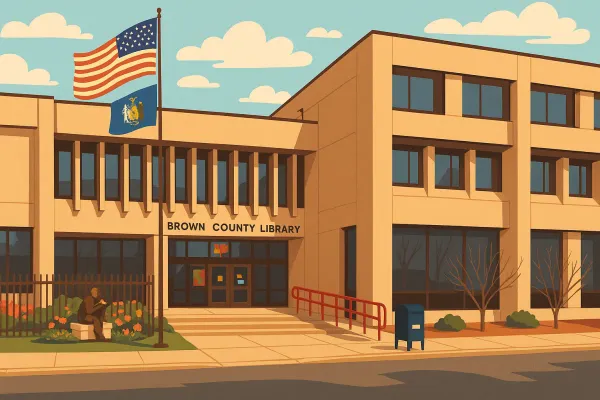
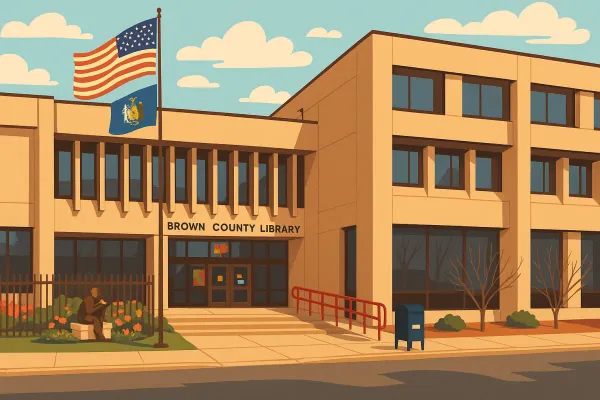
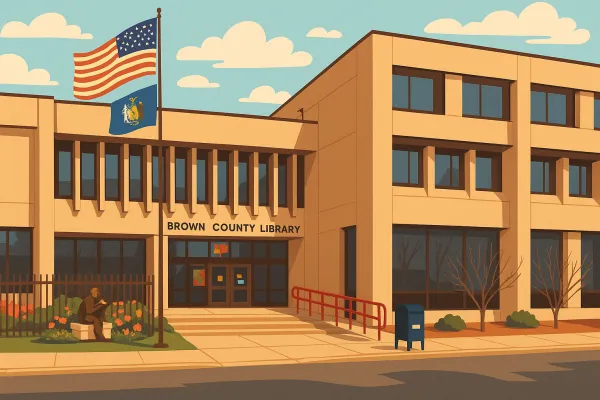
Brown County Library board advances projects, prepares Pulaski move, and lists Ashwaubenon branch for $695,000
GREEN BAY — October 16, 2025 The Brown County Library Board met Thursday evening at the East Branch, covering everything from rural library construction and property sales to policy changes at Central Library. East and Denmark branch updates East and Denmark Branch Manager Bobbie Kuehn, who has worked for the library since 2004, reported that the East Branch continues to post the system’s highest public-computer use and sees constant demand for its five study rooms. Groups from Aspiro and ot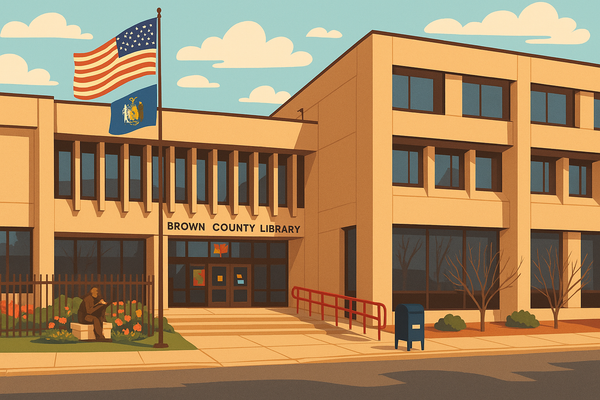
Brown County Library Board Weighs Growth, Safety, and Budgets in Busy September Meeting
GREEN BAY — September 18, 2025. The Brown County Library Board packed its September agenda with updates on rural branch projects, safety policies, and fiscal planning, underscoring the system’s balancing act between expanding community services and managing financial strain. Board President Jayme Sellen opened the meeting with approval of August minutes, before trustees turned to a range of discussions that touched nearly every corner of the system. Pulaski and Denmark: New Spaces for Rural Co
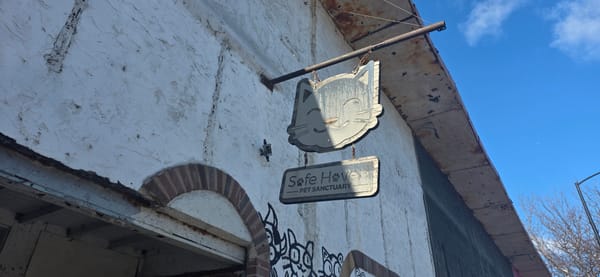
City of Green Bay Orders Removal of Unhoused
Today, Safe Haven Pet Sanctuary received an order from the City of Green Bay to stop housing unhoused people overnight. This comes after Safe Haven allowed unhoused people to stay during the snap freeze, with many people unable to access alternatives like St. John’s Homeless Shelter. The order also listed allegations of drinking and smoking occurring on the premises. These claims are currently unsubstantiated. Instead of working to house these people, the city is focusing on attacking businesses